Dr. Pulley Sliders Part 2: Taming the Piaggio Beverly 400 HPE
If you read my previous post on upgrading the Beverly 350 with Dr. Pulley sliders, you’ll know I’m a big advocate for ditching Piaggio’s stock round rollers in favour of Dr Pulley Sliders. Back in Northern Ireland, I put standard-weight (16g) sliders in the 350 with a very specific, singular goal: to drop the RPMs at motorway speeds. I even brought out the OBD scanner to give hard, undeniable data that it worked exactly as planned.
Fast forward to now. I’m back in Spain with my Beverly 400 HPE. I do like this scooter, very much, although it's fair to say we have a love/hate relationship. Yes, it's much more powerful than the 350 back in NI (way more powerful than the measly 50cc upgrade would have you think). Plus, it's infinitely smoother than the 350 too, but it has its gremlins. All in all, it's just not as lovable as my pure workhorse analog 350. Nonetheless, as good as the ride and handling of the 400 is, it's not perfect.
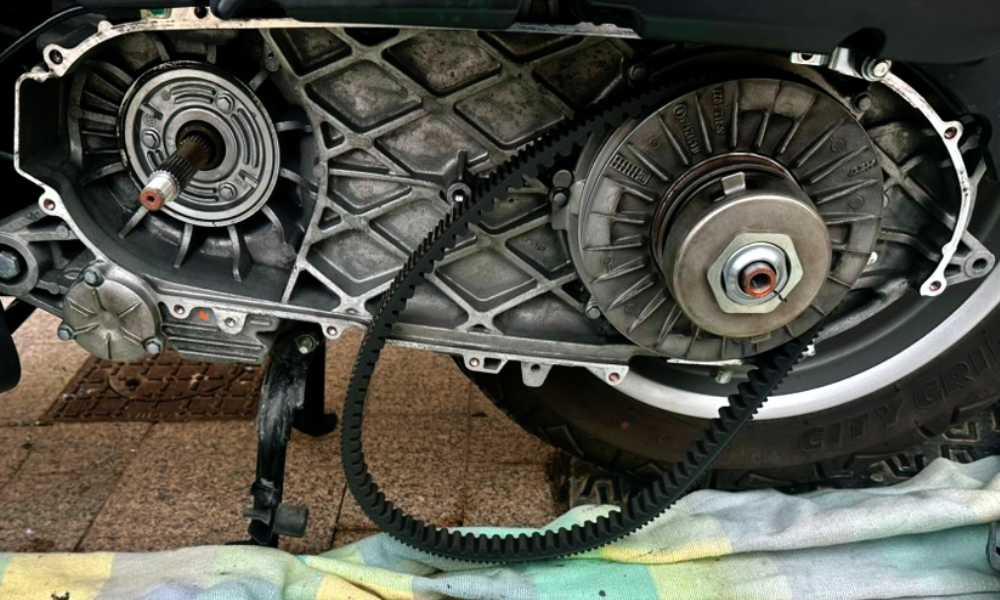
At slow speeds, I'm talking making your way along the tight, narrow streets of the typical Andalusian village, and crawling along the coast in bumper-to-bumper tourist traffic' it's not the best-behaved scooter I've ever ridden. The Beverly 400 struggles to maintain the theoretical first gear when the revs drop right down to a crawl, it can annoyingly drop into neutral when you least expect it, then juddering back "into gear" when you, even gently, apply the gas. And whilst the power delivery once you're up to speed is up there with the best of them, below 30 km/h it can often be a bit of a judderfest.
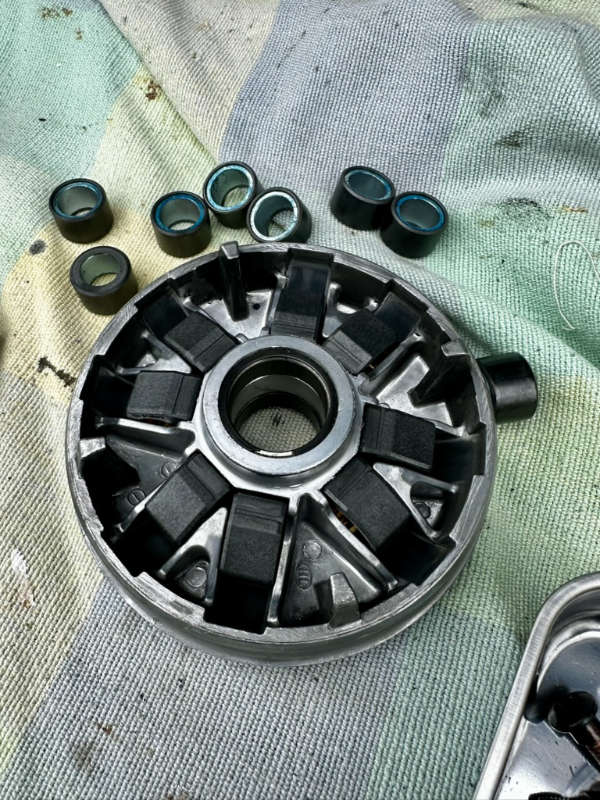
So, after the success of sticking some Dr. Pulley sliders into the 350, I started to wonder if they were the solution for the 400 too. After a bit of thinking, I headed back to the Dr. Pulley site and ordered up some 25x16 17g sliders, having them shipped to Spain. This turned out to be a big mistake. When the previous sliders arrived into NI from Taiwan there was no duty to pay. But this is Spain, and the government always wants their little bit extra, and duly slapped a €35 import duty on them. Cheers Pedro!
Why I Dropped the Weight
With the 350 back home, I stuck to the stock 16g weight, because the goal was to lower the RPMs at motorway cruising speeds. But the 400 presented a different problem, so it was time to experiment a little.
The factory roller weight for the 400 is 18g, and at motorway speeds, thanks to the extra power, it already purrs along at a low RPM. Because of their unique cam shape, Dr. Pulley sliders physically push the belt higher on the variator, essentially acting like a heavier round roller in the mid-to-top end. So if I had put 18g sliders in, it would have risked bogging the bike down once we hit 100+ km/h. Especially when, unlike the 350, the 400 often has to haul me and a pillion.
The general rule of thumb for Dr. Pulleys is to drop 10% to 15% off your stock weight to maintain the factory power curve. I decided to compromise and drop to 17g. It’s a conservative drop, but I figured it would perfectly balance the low-speed control I desperately wanted and introduce only a small high-speed overdrive; cus hey, within reason, the lower the cruising RPM the better, right?
The Shakedown Results (No OBD Required)
Unlike the testing I did with the 350 and the sliders, I didn't have an OBD scanner to hand, so I had to rely on the trusty "bum dyno". But...
After fitting the sliders, I took the 400 out for a proper shakedown ride. I bedded them in along the glorious N-340 Nerja to La Herradura run (if you ever get the chance to ride this stretch of road, trust me, take it: breathtaking!). Then I jumped on the A-7 and headed for Torre del Mar. Here is exactly how the bike’s character has changed across the speed range:
0-30 km/h: The Magic Fix
There is no noticeable change in power here, but the delivery is vastly superior. The roll-on/roll-off throttle is incredibly refined, with all the snatchy "gear" take-up completely banished. I tested it at a literal crawling speed, and the wet clutch now stays firmly engaged right down to 9 km/h (compared to the old 15-20 km/h drop-out). When it finally does disengage, bringing the drive back in is utterly seamless. No jolts. Just smooth, linear forward motion. This was the perfect result, and will make inching forward in the summer traffic much more comfortable.
30-60 km/h: The Small Sacrifice
As expected with a slightly heavier effective ratio, there is a minor loss of grunt in the mid-range. You have to twist the throttle a bit harder and up the revs to get a big power surge out of a corner. It's a shame, but honestly, it's a completely acceptable trade-off for how good the low speeds feel.
60-80 km/h: Status Quo
Feels virtually identical to stock.
80-120+ km/h: The Sweet Spot Overdrive
This is where it gets interesting. As you approach 120 km/h, the RPM for a given speed is lower. Not as dig a difference as experienced with the 350, but a difference nonetheless. With the old round rollers, I was averaging 105 km/h at roughly 6,000 RPM. With the 17g sliders, it’s now cruising at the same speed about 500 RPMs lower.
But here's the kicker: acceleration from 105 km/h to 130 km/h is actually stronger. Why? Because the Piaggio 400 HPE makes its peak maximum torque right at 5,500 RPM. The Dr. Pulley overdrive has essentially dropped my cruising RPM dead-center into the engine's maximum pulling range. When I open the throttle at 100 km/h now, the bike surges forward with a lot more force than it did with the stock rollers.
The Verdict
When I ordered these sliders, the mission was simple: fix the low-speed handling for tight Spanish villages. I wanted to eliminate the neutral drop-outs and smooth out the 0-30 km/h delivery.
That core objective has been achieved flawlessly; the low-speed manners of the 400 are now near perfect. The fact that the bike also gained a subtly more relaxed highway overdrive that somehow sits perfectly in the peak torque band is just the cherry on the cake.