The Viñuela Miracle: Why Blaming the Rain is a Load of Bollox
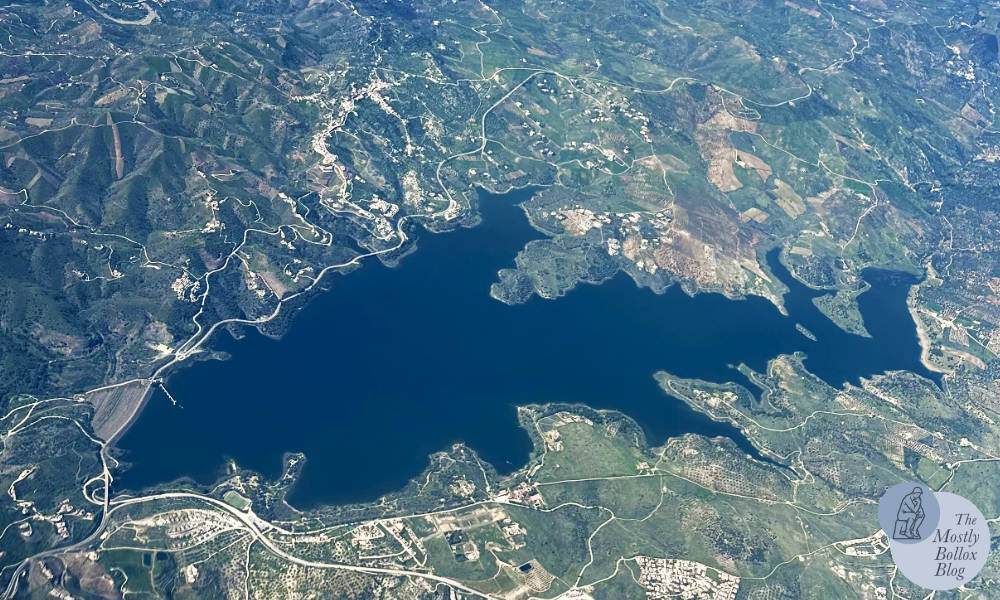
(Header Image: Lake Viñuela from a plane, taken March 2026. Copyright The Mostly Bollox Blog)
If you’ve driven past Lake Viñuela recently, you’ve seen it. The turquoise jewel is back. We are sitting at roughly 75% capacity, which is a far cry from the terrifying 7% puddle we were staring at in early 2024.
The locals are cheering, the politicians are patting themselves on the back, and the estate agents are probably updating their "stunning lake views" listings as we speak. The general consensus down the bars seems to be that the drought is over because the rain finally turned up.
Well, I hate to be the one to piss on the parade (or fill the lake, as it were), but that is absolute bollox.
Don't get me wrong, the rain helps. We’ve had a biblical amount of it in the last 18 months. But to say the lake ran dry solely because of "a lack of rain" is lazy. It ignores the uncomfortable truth that what happened in the Axarquía wasn't just a meteorological drought. It was a man-made disaster.
Here is the reality of why we nearly ran out of water, and why it will happen again if we aren't careful.
The "Green Gold" Rush
If you drive around the Axarquía, you see them everywhere. Avocados and mangoes. Thousands of acres of lush, tropical green trees covering the hillsides.
Now, I like a bit of guacamole as much as the next man, but there is a slight snag. Avocados are tropical plants. The Axarquía is semi-arid. These trees are thirsty beasts, and for the last decade, the authorities handed out agricultural licences like they were flyers for a dodgy nightclub.
They allowed the "Green Gold" industry to expand massively without checking if there was enough water in the bank to cash the cheque. The demand from these farms outstripped what the reservoir could sustainably provide years ago. We were running a structural deficit long before the rain stopped.
The Illegal Straws
As the lake level dropped, you’d think the logical step would be to turn off the taps, right? Not quite.
As the surface water vanished, a black market for water kicked off. Farmers who couldn't get water from the lake started drilling. In a crackdown called Operation Chaak, the Guardia Civil found over 250 illegal wells and boreholes in the area.
Think about that. While our water was going off at night, there were hundreds of illegal straws sucking the groundwater aquifer dry to keep the fruit trees alive. It depleted the natural backup system that should have saved us.
The Housing Madness
Then you have the planning departments. You would think, logically, that if a region is running out of water, you might stop approving permits for new swimming pools and massive urbanisations. Not a chance.
While the reservoir level was dropping like a stone, the cranes were still up, building more holiday homes and apartments. The logic seemed to be that if we just built enough houses, the water would magically appear to fill them. It’s the classic Spanish approach of waiting until the engine seizes before checking the oil.
The Desalination Fairy Tale
And then there’s the desalination plant. Do you remember the local mayor (I won't name names, but you know the one) proudly announcing back in 2024 that we’d have a fully operational plant within four years?
Bollocks.
It is now 2026, and that plant is still stuck in the "preliminary paperwork" phase. Between the local councils, the Junta, and Madrid, they can’t agree on whose job it is to sign the form, let alone lay a brick. At this rate, we’ll be drinking desalinated tears before we get a drop of water from that plant.
The Reality of the "Cuts"
And let’s clear up a myth about the restrictions. People outside the area think we were just politely asked to turn the tap off while brushing our teeth.
If only.
For those of us living here, the reality was the water shutting off at 11pm sharp. If you wanted a shower after a late shift, tough luck. And the worst part wasn't the cut-off; it was the switch-on. When the water came back in the morning, it hammered through the pipes with the force of a small army.
It blew the seals off taps and, in my case, destroyed the boiler. Nothing says "water conservation" like having to replace your entire heating system because the council treats the mains pressure like a light switch.
So, Are We Safe?
For now, yes. The lake is full, and we have a buffer of maybe two or three years. To be fair, they have started rolling out the "purple pipes", using recycled water for the farms instead of draining the drinking supply. It’s a sensible move.
But here is the cynical kicker: recycled water costs money to pump and treat. Lake water is "free" (until it runs out). Now that the reservoir is brimming again, how long will the farmers stick to the expensive purple stuff before quietly switching back to the cheap tap?
If there is one thing you can rely on in local Spanish government, it’s that lessons are rarely learnt. The rain didn't fix the problem; it just covered up the cracks. If we go back to the old ways, we will be back at 7% in a few years.
Enjoy the view while it lasts, cheers.